
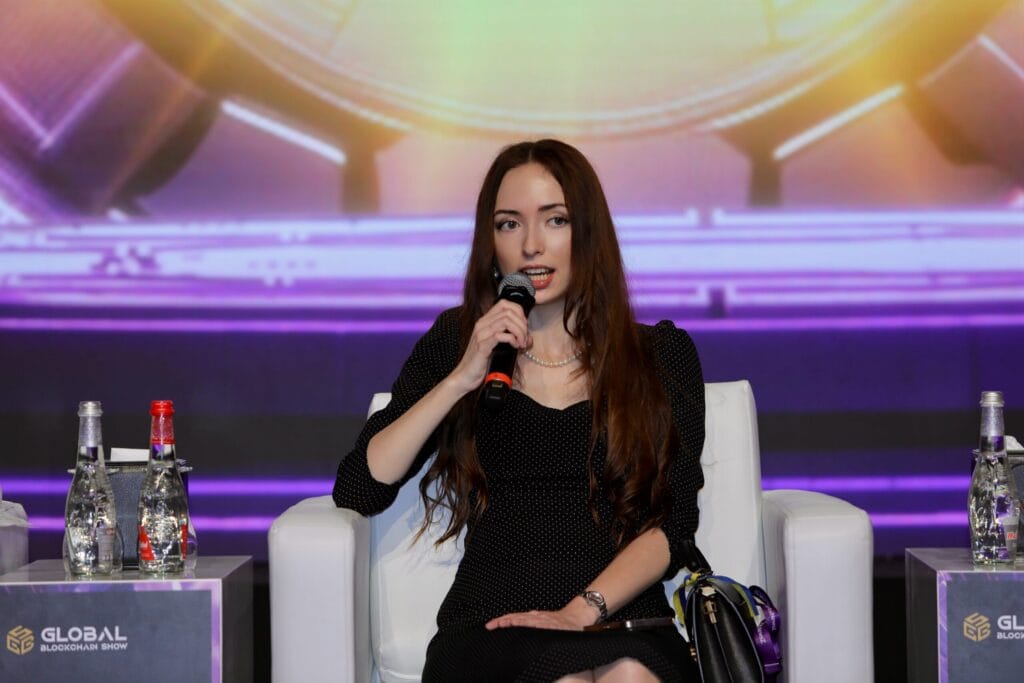
As the world of digital assets continues to evolve, so does the conversation around regulation, adoption, and innovation. To help us navigate what’s next, we spoke with Anna Tutova, renowned public speaker and CEO of Coinstelegram, a crypto media and PR-consulting agency. With a background in international law and expertise in public relations and business development, Anna offers a unique and informed perspective on the future of the crypto market.
- Anna, how would you describe the current state of the crypto market in 2025?
The crypto market in 2025 is experiencing a new phase of maturity and mainstream integration. Despite ongoing volatility and macroeconomic challenges, the total market capitalization remains robust—hovering around $3.7 trillion as of July 2025—with strong investor confidence and significant institutional participation with regulated Bitcoin ETFs and Bitcoin futures trading volume and open interest hitting record highs, signaling deeper integration into traditional finance. Meanwhile, nearly 25% of adults globally now own crypto, up from 21% in 2024, driven by regulatory clarity and macroeconomic uncertainty.
- What are the key trends you see shaping the future of digital assets this year?
– Institutionalization: more traditional financial players and funds entering the space. The launch of US spot-Bitcoin ETFs, for instance, has brought in huge inflows (U.S. listed Bitcoin ETFs reached $153.01B market cap). Major companies are adding crypto to their treasuries, and Wall Street firms are creating crypto products. This legitimizes the market and often reduces volatility.
-Government Adoption:: The U.S. Strategic Bitcoin Reserve and pro-crypto executive orders, upcoming Clarity Act and Genius Act under Trump have legitimized crypto as a macro asset. Countries like China, El Salvador, and Bhutan accumulate Bitcoin reserves.
Additionally, the U.S. is advancing crypto-friendly laws (e.g. the Senate recently passed a stablecoin framework, which the new administration plans to enact). Meanwhile, countries like the UAE and Singapore are actively embracing blockchain (licensing exchanges and experimenting with tokenization projects).
– Integration of AI with crypto increasingly seen as the native currency for AI agents and decentralized AI applications.
– Tokenization of RWAs: Real estate, commodities, and bonds are being fractionalized on-chain, with VanEck projecting a $50 billion RWA market by year-end .
-Public companies buying Bitcoin for its balance sheet: MicroStrategy, Metaplanet, Rumble. Launch of Twenty One Capital in partnership with Cantor Equity Partners, Tether and SoftBank to buy Bitcoin.
– Regulatory Maturation.
- Do you think Bitcoin has reached its peak, or are we just getting started with its global adoption?
Bitcoin is far from peaking. Bitcoin recently reached an all-time high of $123,000+, but we’re still early in global adoption.
With persistent inflation and the likelihood of further monetary expansion, money printing in the US, Bitcoin is increasingly viewed as a safe haven and digital gold. For example, Standard Chartered’s head of crypto research forecasts -$200,000 by end-2025 and a path toward -$500,000 by 2028. Others (like ARK Invest’s Cathie Wood, Arthur Hayes(co-Founder BitMEX)) foresee Bitcoin reaching on the order of $1 million by 2028-2030.
The ongoing macroeconomic environment and growing institutional demand are likely to push adoption even further.
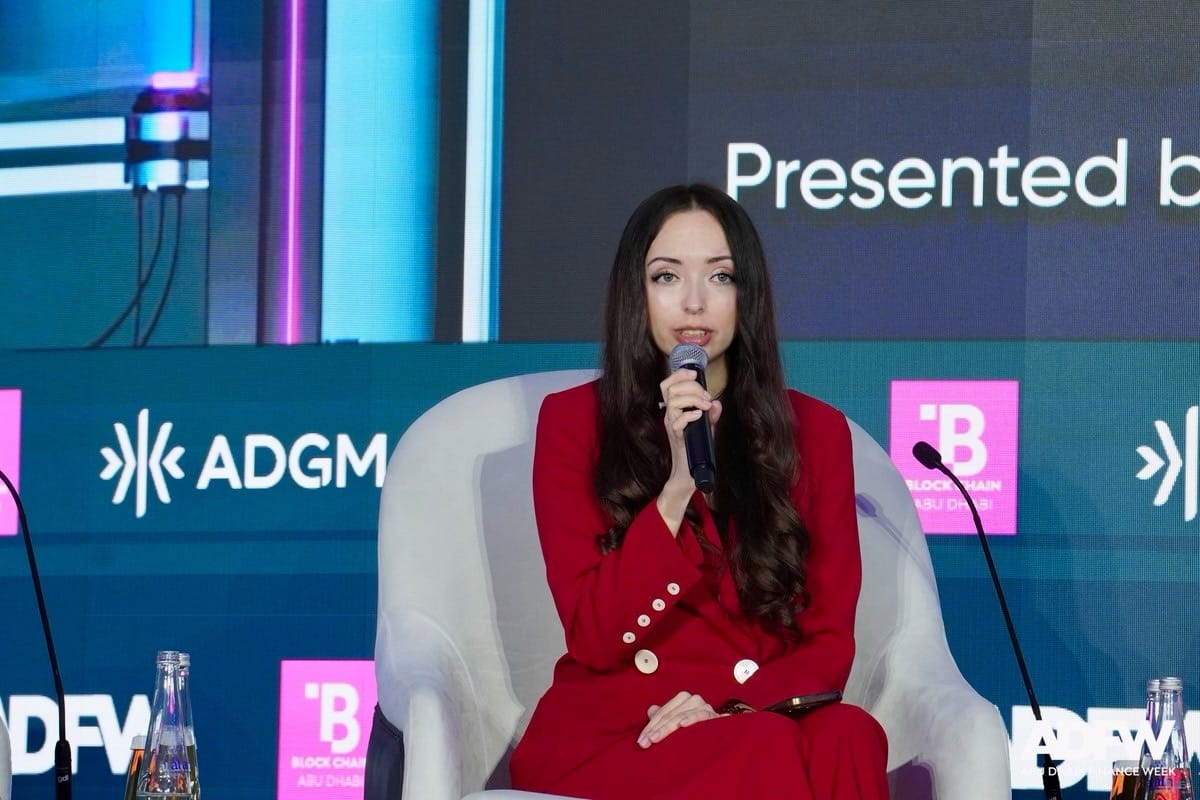
- Which altcoins or blockchain projects do you believe have the strongest potential for real-world use cases?
Many projects: established ones and startups have real-world potential. I`ll highlight some major ones. Though their implementation and technological advancements may not always be reflected in the price action.
Solana($SOL): A fast, scalable Layer 1 that’s powered a huge DeFi/memecoin ecosystem. It’s practically the Ethereum killer for many users because transactions are cheap and quick. Its technology is being used for everything from tokenized real estate to gaming, and the network effects are growing.
Ethereum($ETH): It’s still the dominant smart-contract platform. Ethereum now has institutional-grade financial innovations – think of its large stablecoin and lending markets, and new decentralized “money market” protocols. It remains central to DeFi and enterprise finance.
Ripple ($XRP): XRP’s ledger is being used in real government projects. A prime example is Dubai: the Dubai Land Department just launched a tokenized real estate platform on the XRP Ledger, enabling fractional ownership of property. This shows XRP’s tech can handle institutional-scale projects (and is gaining trust in large markets like the UAE).
Avalanche ($AVAX): Another high-speed blockchain that’s focusing on finance and gaming. Its consensus design and subnets make it flexible for regulated institutions. In fact, JPMorgan’s Kinexys(former Onyx lab) has tested tokenized instruments on Avalanche. Citi trials fund tokenization on Avalanche subnet.
Ethena ($ENA): A stablecoin/money-market project on Ethereum. It issues a crypto-native “synthetic dollar” called USDe that aims to give users interest (unlike plain USDC) through yield mechanics. It’s an example of how DeFi is reinventing traditional finance products on-chain.
Sui($SUI): A newcomer by the people behind Facebook’s Diem. It’s a next-gen blockchain built for fast transactions and a good developer experience (with the Move language).
Hedera Hashgraph($HBAR): A DLT network (not a typical blockchain) governed by big corporations like Google, IBM, and even some governments. It’s being pitched as “blockchain for business”: low fees, fast finality, and energy efficiency. Governments and enterprises have been piloting it (India and South Korea announced research partnerships, for example).
The Open Network – TON ($TON): Essentially, TON is getting built into the Telegram ecosystem – payments, bots, premium features – so it has a massive user base potential(Telegram’s 1B users provide a massive onboarding funnel ). That could make it one of the most-used tokens for everyday transactions in 2025.
Aave ($AAVE): A leading DeFi lending platform on Ethereum. It’s now evolving with features for institutions (like Aave Arc, a compliant version of Aave for regulated players). Banks and fintechs are testing Aave-like systems for loans and yield.
Ondo ($ONDO): Specialized in tokenizing real-world assets (RWAs). Ondo issues tokens backed by things like U.S. Treasury bills or money-market funds. This means you get DeFi-level transparency and tradability on traditional safe assets. For example, Ondo’s USDY token is like holding cash yield on-chain. So Ondo bridges the gap between finance and crypto.
Raydium ($RAY), Jupiter($JUP): Solana-based exchanges (AMM). It’s literally an example of how alt ecosystems can leapfrog legacy: in late 2024 Raydium overtook Uniswap for monthly DEX volume, thanks in part to Solana’s memecoin boom.
- How are global regulations evolving, and which countries do you think are leading the way in supporting crypto innovation?
Regulatory clarity is advancing worldwide. The UAE is at the forefront, rapidly implementing comprehensive crypto regulations and attracting global players. It has a comprehensive framework (the SCA, ADGM and Dubai’s VARA rules) Dubai and Abu Dhabi are licensing dozens of crypto exchanges and service providers, attracting global firms. They’ve been friendly to tokenization projects (like the real estate especially, tokenization of title deeds by DLD).
The U.S. is entering a new phase under the current administration. Crypto regulation there is becoming clearer: for example, Congress just passed a landmark stablecoin bill, and the President has signaled he’ll sign crypto-friendly laws by mid-2025. This is a big change from earlier uncertainty. The U.S. still has agencies figuring out crypto (SEC, CFTC, Treasury), but the political winds (with Bitcoin ETFs live) are more supportive now.
Other countries: El Salvador initially adopted Bitcoin as legal currency(not a legal tender anymore, but still they are very crypto friendly), Tether opened its HQ there.
Europe rolled out MiCA (Markets in Crypto-Assets) as a unified rulebook for the EU – so exchanges and digital assets issuers now have clear EU-wide rules. Hong Kong is open to crypto by licensing exchanges under heavy regulation. Singapore remains one of the more permissive places in Asia, with clear laws for crypto businesses, but still put strict restrictions on retail participation and limited product offerings.
- Do you see more institutional adoption as a threat to the decentralized ethos of crypto, or as a necessary evolution?
Institutional adoption is a double-edged sword. While it brings credibility, liquidity, and stability, it also risks concentrating power among large players—such as miners, funds, and corporations—which can run counter to Satoshi’s original vision of decentralization. However, it’s a necessary evolution for mainstream acceptance.
Even if a Wall Street fund holds a Bitcoin ETF, the Bitcoin network itself remains the same decentralized code. Satoshi did want to remove middlemen, but he also wanted Bitcoin to succeed as money. If institutions buy Bitcoin instead of printing fiat, that’s arguably in line with Bitcoin’s role as a non-government money. True, we now have government-regulated ETF issuers and custodial banks, which Satoshi probably didn’t imagine. But those institutions operating in crypto could help stabilize the system and bring in real-world legitimacy.
It’s a debate worth having, but so far I don’t see it breaking the core value – it’s more like two worlds merging.
- Layer 2 solutions and next-gen blockchains are gaining momentum. What do you think will define the next technological breakthrough in crypto?
The founders and developers in the space have been working for too long on technological, scalability solutions: we see multiple of Layer-1 and Layer-2 blockchains, majority of which have very limited activity. So now is the time not to focus just on technological blockchain innovations, but on real-world applications implementing those blockchains and consumer apps.
From the tech solutions I consider interesting is privacy tech. ZK-proof systems (like ZK-SNARKs) will keep improving – you might see private smart contracts or confidential asset transfers go mainstream.

- What role do you see AI playing in the future of blockchain and DeFi?
AI is becoming deeply intertwined with blockchain. Crypto is increasingly seen as the currency of AI—enabling autonomous agents to transact, invest, and manage assets in decentralized ecosystems. Crypto as AI’s currency also means machines could transact with each other. Imagine an IoT device paying micro-Bitcoin to an edge AI for processing power, all settled on-chain.
Decentralized AI (DeAI) offers cheaper, more transparent, and censorship-resistant alternatives to traditional AI platforms.
- You have a background in international law — how has that shaped your approach to the crypto space?
Crypto is global by nature – transactions cross borders, and different jurisdictions have different rules. Legal knowledge is helpful, but adaptability and continuous learning are essential in this fast-moving industry. Law moves much slower than tech. By the time a legal framework is written, crypto might have evolved.
In short, an international law background gives me useful perspective, but I’ve learned to look forward, not backward, and treat legal knowledge as one part of the strategy rather than the only guide.
- As the CEO of Coinstelegram, what are your main goals this year, and what are you most excited about?
My main goal is to onboard more people into Web3 and crypto, making the space more accessible and inclusive. Within the last few years we released three documentary films on crypto and blockchain adoption and how this technology changes people`s lives. The first film was made in El Salvador(the first country in the world, which adopted Bitcoin as official currency), the next two were filmed in Dubai, Singapore and Europe, featuring key leaders of the industry as CZ(Founder of Binance), Vitalik Buterin(creator Ethereum), Paolo Ardoino(CEO Tether, the most profitable company in crypto, issuer of USDT) etc. We plan to release our new fourth documentary in June 2025.
- You travel and speak at many global conferences — what are the most common misconceptions people still have about crypto?
Many still equate crypto with scams or dismiss Bitcoin as speculative. In reality, the industry is maturing rapidly, with increasing regulatory oversight and institutional participation.
39% of U.S. crypto owners now hold ETFs, and 50% of Millennials/Gen Z have invested—proof of its maturing legitimacy .
While scams exist (as they do in any industry), the core innovation – blockchain – is not a scam. It’s like saying “the internet is a scam” because there are phishing sites. We talk about real success stories: how blockchain is securing vote-counting pilots, or enabling cross-border payments cheaply. Education is key: the more people see real products (like actual remittances or smart contract loans), the less they fear crypto as inherently fraudulent.
I also confront the fear that “crypto is only used by criminals.” In reality, most crypto volume is traded on legal exchanges, and blockchains are transparent (the opposite of criminal-friendly cash).
- What advice would you give to someone looking to enter the crypto space in 2025 — whether as an investor, entrepreneur, or developer?
- Investors: Start with Bitcoin and perhaps Solana as a high-growth asset, if you’re not following the space closely. You can rebalance or take profit on smaller altcoins over time, but holding BTC (and adding some SOL) is a safe baseline strategy in 2025.
- Entrepreneurs: Attend blockchain conferences and meetups constantly. Networking is everything. This space still values boots-on-the-ground community building. Learn from others, pitch your idea whenever you get the chance, and build relationships with potential partners. Also, focus on solving real problems — that attracts both users and investors.
- Developers: Build on the most active chains or pioneer something new—innovation is always rewarded in this space.
- How can women become more active and influential in the crypto and blockchain world?
The crypto space is open and welcoming—there are no gender barriers here. My advice is to learn as much as possible. There are tons of free resources – blogs, podcasts, news articles – and a very supportive community. The opportunities are vast for anyone willing to dive in. Consider joining women-in-crypto networks or mentorship programs. Also, get hands-on: buy a little crypto, try a wallet, or deploy a smart contract if you’re technical.

- If you had to summarize the key to long-term success in crypto in just a few words, what would it be?
- For investments: Hold your Bitcoin through the cycles; it’s the safest long-term bet. For altcoins, take profits intelligently – sell into surges and accumulate during dips.
- For business: Crypto markets are cyclical and sometimes irrational, so don’t expect instant success. Keep improving your product no matter what. Watch your runway and burn rate carefully (the bear markets can come fast). Meanwhile, cultivate your community and reputation – brand trust is huge in crypto. Those who survive and thrive are usually the teams that kept showing up, iterating, and supporting their users even during the downturns.