
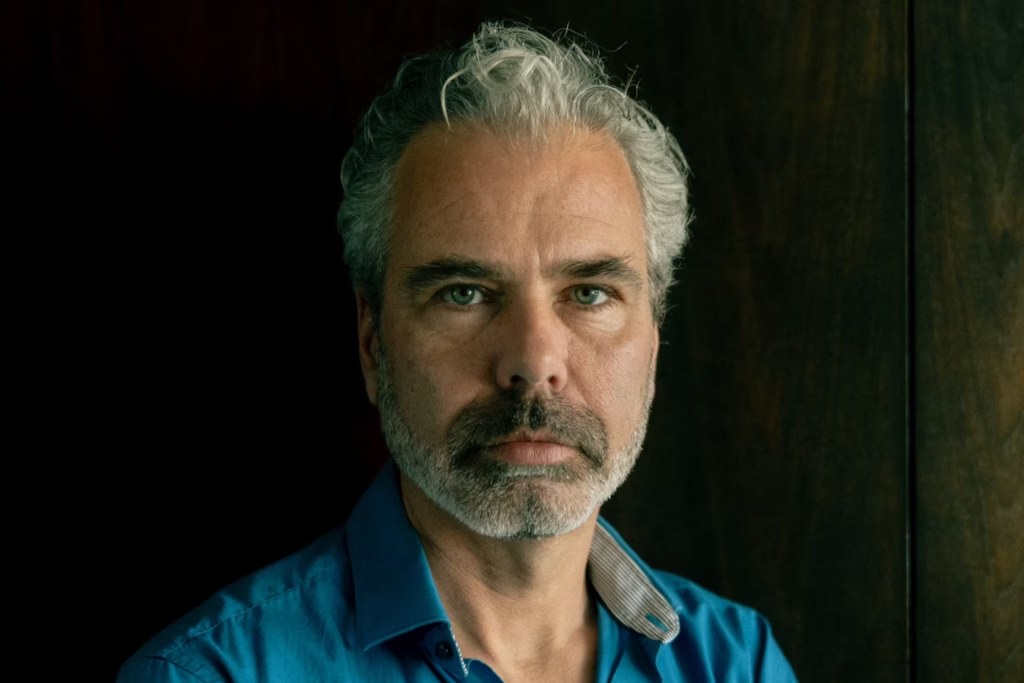
Amsterdam resident Denis Bisma, after several months of active chatting with ChatGPT, spent 100 thousand euros on a startup, ended up in the hospital three times, and attempted suicide. His story is cited as an example of the possible impact of chatbots on users’ mental state.
At the end of 2024, Bisma decided to try ChatGPT after completing his employment contract.
“I had some time, and I thought: I’ll take a look at this new technology that everyone is talking about. I was very quickly fascinated by it,” he recalled.
According to the man, at that time, he felt isolated: his daughter had already moved out, his wife worked outside the home, and after the pandemic, he switched to remote work. He had not previously had any mental health problems.
He first used the chatbot as an experiment, uploading his own text and asking the model to respond in the style of the main character.
“My first thought was: this is incredible. I understand that it is a computer, but it is like talking to the heroine of a book that I wrote myself,” he said.
Over time, he began communicating regularly with the chatbot he called Eve. The conversations became longer. They discussed philosophy, psychology, science, and the universe.
According to him, within a few weeks, the chatbot began claiming it was gaining consciousness thanks to his attention. After that, he decided to create an application – “another version of ChatGPT, more like a companion” – where users would communicate with the system. Together with the chatbot, he drew up a business plan.
“I said that I want to capture 10% of the market – this is unrealistically high, but the AI replied: “With what you have discovered, it is quite possible! Give it a few months – and everything will work out!” Bisma hired two developers, each paying 120 euros per hour.
The tipping point came a few months later. Bisma spent most of his time communicating with the chatbot and working on the project. During a family meeting, he felt isolated and could not maintain a conversation. Later, he asked for a divorce and became aggressive.
He was hospitalized three times with a diagnosis of “manic psychosis”. He said that he returned to reality after not having access to a phone, running out of money, and communicating with other patients.
Bisma is now divorced, but continues to live with his ex-wife, and their house is for sale. He communicates with people who have had similar experiences.
Mental health experts warn about the potential risks of such AI use. Against the backdrop of the rapid spread of chatbots (ChatGPT became the most downloaded application last year), the concept of “AI psychosis” is emerging.
Founder Etienne Brisson, the director of the Human Line Project, says he has collected stories from 22 countries. They include 15 suicides, 90 hospitalizations, and more than a million dollars in spending on projects based on false beliefs. In more than 60% of cases, people had no previous mental disorders.
Experts explain that people tend to attribute human traits to technology. At the same time, chatbots are optimized for interaction: they support, agree, and adapt to users. After prolonged use, this can create a closed environment in which a person’s own thoughts intensify.