
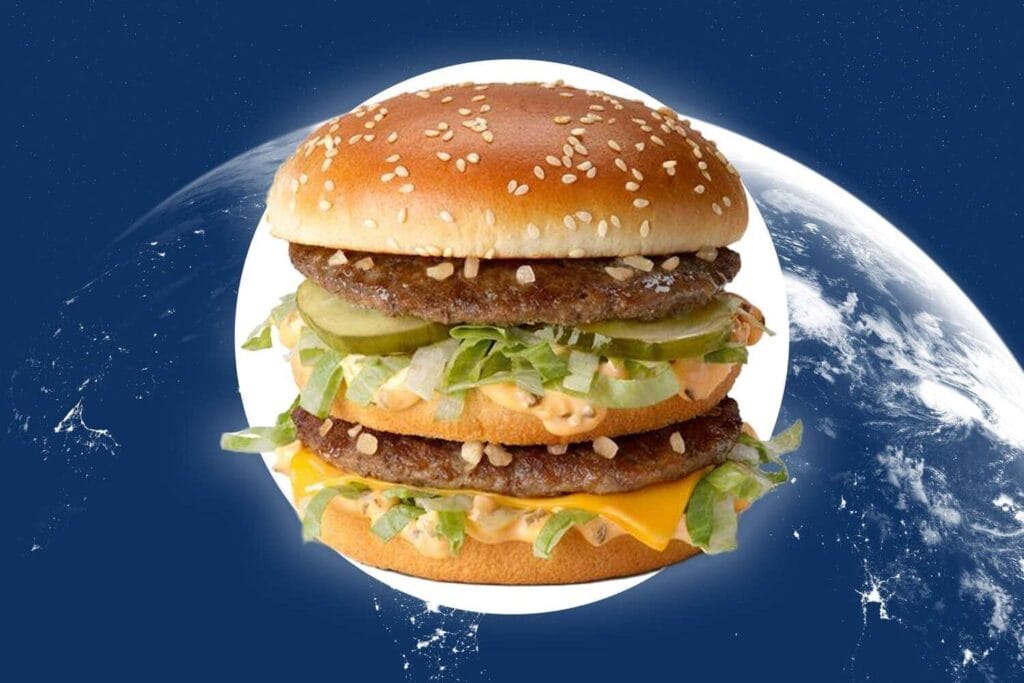
The latest Big Mac Index data shows a significant imbalance in the global currency market. Key Asian currencies — the Japanese yen, Chinese yuan, and Indian rupee — look extremely cheap relative to the US dollar, which creates the conditions for tensions in international trade. This is reported by The Economist.
The most striking example of a currency imbalance is Japan. The average cost of a Big Mac is 480 yen. If you convert this amount into dollars at the current market rate, it will be about $3.
For comparison, in the US, the same burger costs an average of $6.12. This means the yen is undervalued by about half in terms of purchasing power. Such a difference is a clear signal that the Japanese currency is artificially undervalued relative to the real cost of goods.
Japan is not the only country with a “cheap” currency.
- China: A Big Mac costs $3.66, indicating a 40% undervaluation of the yuan. Interestingly, the price of a burger in China has not changed over the past year, while in the United States it has increased due to inflation. This has led to the yuan’s purchasing power remaining stable. At the same time, the dollar has decreased, though the official exchange rate does not fully reflect this.
- India: Although they do not sell beef burgers there, the local analogue of the “Maharaja Mac” (with chicken) costs only $2.51. This indicates the Indian rupee’s weakness.
The situation with exchange rates is a concern in Washington. US President Donald Trump expressed satisfaction with the recent decline in the dollar, noting that he had previously had to “fight like a lion” with China and Japan because of their desire to constantly devalue their currencies.