
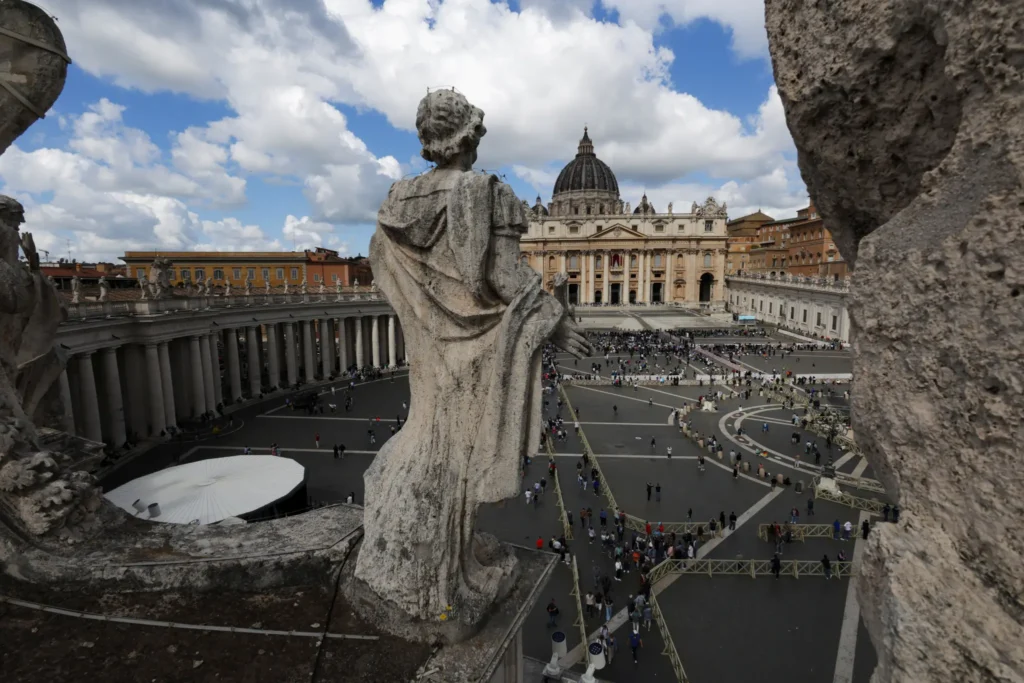
The Catholic cardinals who meet at the conclave are locked in the Sistine Chapel, one of the most grandiose buildings in the Western world. But their meals are certainly less elegant.
According to the BBC, the cafeteria food at Casa Santa Marta consists of little more than plain spaghetti, boiled vegetables, minestrone soup, and lamb kebabs for the duration of a secret ritual.
But the cloak of secrecy enveloping the conclave goes far beyond locked doors, cell phone signal jammers, and threats of excommunication — even food has been tightly regulated to ensure that messages from the outside world do not penetrate.
Certain foods — including whole roast chicken, stuffed ravioli, pies, and even rigatoni — were banned or scrutinized in previous conclaves, all considered easy vehicles for clandestine communication.

All of the food will be prepared by nuns from the Domus Sanctae Marthae — the dormitory where the cardinals sleep and live outside of their deliberations — who earlier this week joined the rest of the Vatican staff in taking a vow of secrecy similar to the one the cardinals took to begin the conclave.
The practice of secret-security food dates back to a time when the reach of the papacy was much more intertwined with political relations, and keeping an open line with the outside world during secret proceedings could have dire consequences. Food was also sometimes used to speed up the conclave process. Some extended sessions in the 1200s and 1300s cut rations as days dragged on without a decision.

In 1274, during a conclave that set the precedent for today’s secrecy, Pope Gregory X first established rules for cardinal diets. These rules, at times, included requiring only clear glasses and a thorough inspection of all napkins and waste.