
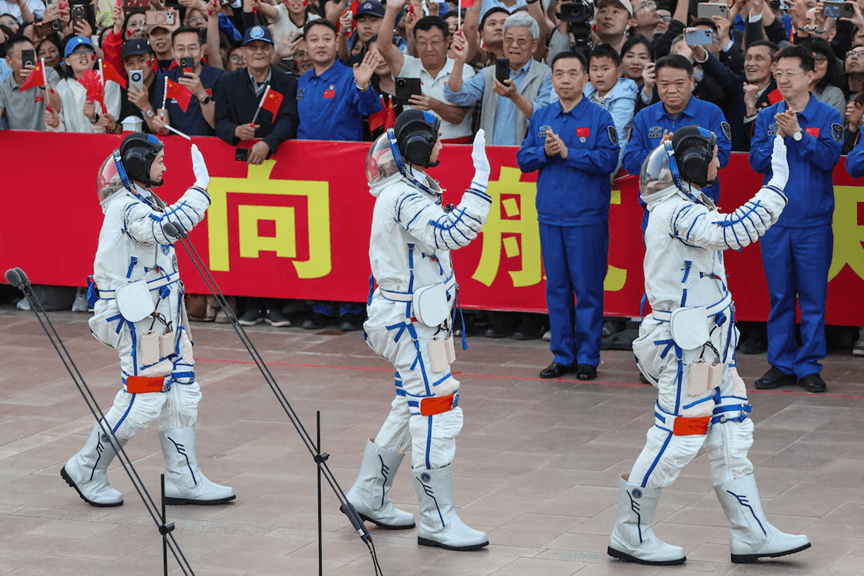
On Sunday, May 24, China sent three astronauts to the Tiangong space station. One of them is set to remain in space for a year—this will be a record-breaking mission duration for the Chinese space program. The Shenzhou-23 spacecraft, carrying the three astronauts, launched from the Jiuquan Space Center in northwestern China and was placed into orbit by a Long March-2F Y23 carrier rocket.
The crew includes commander Zhu Yangzhu, pilot Zhang Yuanji, and payload specialist Li Jiajing. She is the first female astronaut from Hong Kong to participate in a Chinese space mission. Li previously worked as a police inspector.
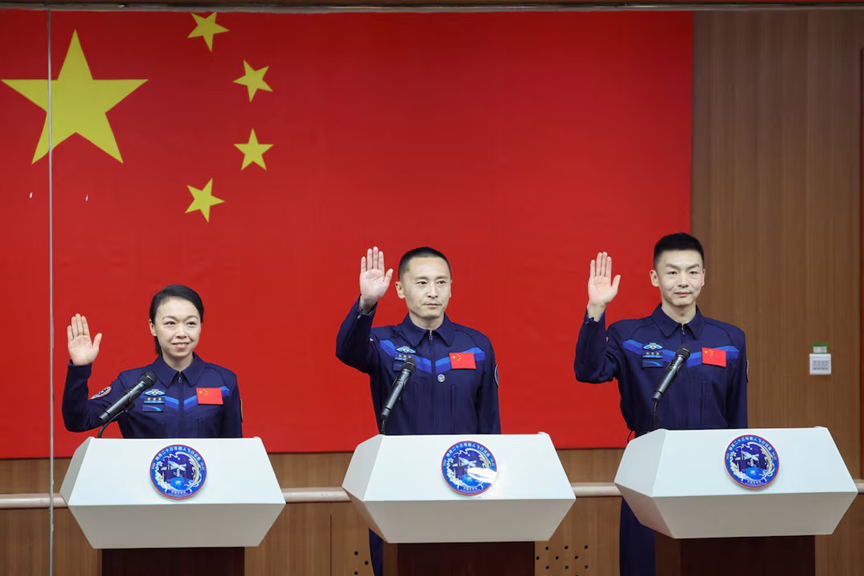
The China Manned Space Agency will determine later who exactly will remain at the station for a year, depending on how the mission proceeds. During the long-duration flight, scientists will study the effects of space on the human body, including radiation, bone density loss, and psychological stress.
The Shenzhou-23 mission is also set to conduct the first autonomous rapid approach and docking with the Tiangong core module. China will need this technology for the future docking of the Mengzhou capsule with the Lanyue lunar lander in lunar orbit.
In addition to technical tests, China is conducting biomedical experiments in orbit. According to state media, human stem cell samples were delivered to Tiangong for the world’s first experiment with a human “artificial embryo” in space. Its goal is to explore the possibilities of long-term human habitation, survival, and reproduction beyond Earth.