
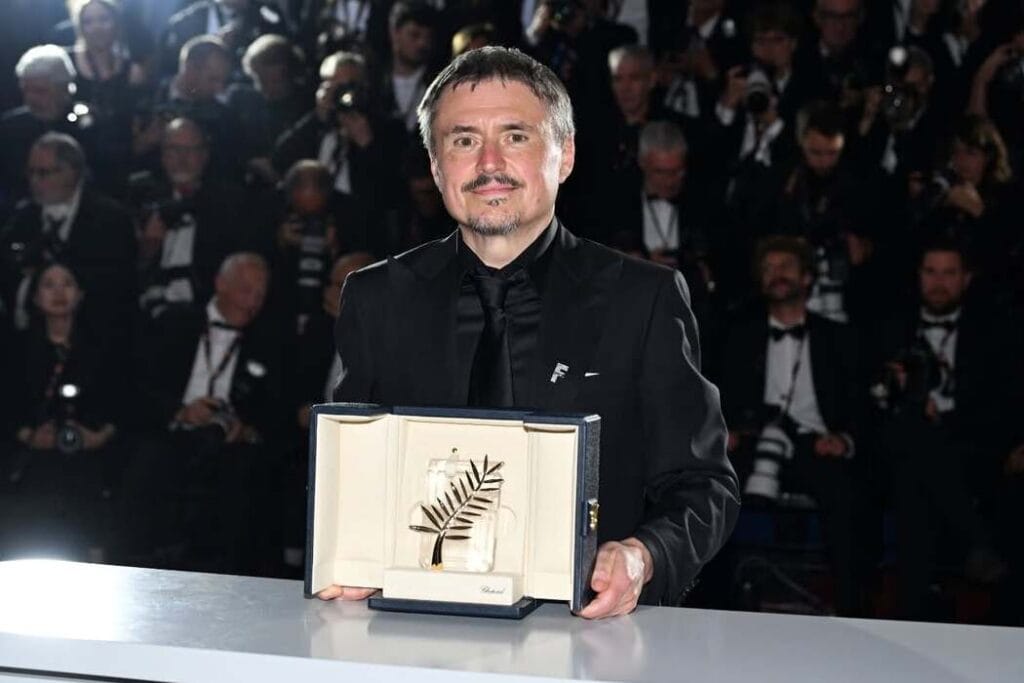
The 79th Cannes International Film Festival has come to a close, and this year’s event was once again marked by high-profile political statements and pressing social issues. The top prize, the Palme d’Or, went to Romanian director Cristian Mungiu for his drama “The Fjord”.
This marks Mungiu’s second victory at Cannes: he first won the festival’s top prize in 2007 for his film “4 Months, 3 Weeks and 2 Days”.
“The Fjord” is a social drama about a Romanian family that moves to Norway and finds itself at the center of a conflict with social services following allegations of child abuse. Critics called the film one of the festival’s strongest works, noting its emotional tension, screenplay, and nuanced exploration of themes of radicalization, empathy, and cultural conflicts.
During the awards ceremony, the director stated that his film is “a call against all forms of fundamentalism” and an attempt to remind viewers of humanity’s importance in an increasingly polarized world.
The festival’s Grand Prix went to the film “Minotaur” by Russian director Andrei Zvyagintsev, who left Russia after the start of the full-scale war. The political thriller tells the story of a wealthy Russian businessman whose life is shattered amid war and mobilization.
The award for Best Director was shared by Javier Ambrosi and Javier Calvo for the film “Black Ball,” and by Paweł Pawlikowski for the drama “Homeland.”
The award for Best Actress went to Virginie Efira and Tao Okamoto for the film “Suddenly.”
Emmanuel Makia and Valentin Campagne were named Best Actors for their roles in the film “The Coward.”

The award for Best Screenplay went to Emmanuel Marre for the film “A Man of His Time,” and the “Jury Prize” went to the film “A Dreamy Adventure” by director Valeska Grisebach.
This year’s festival jury was chaired by South Korean director Park Chan-wook. The jury also included Demi Moore and other representatives of the global film industry.