
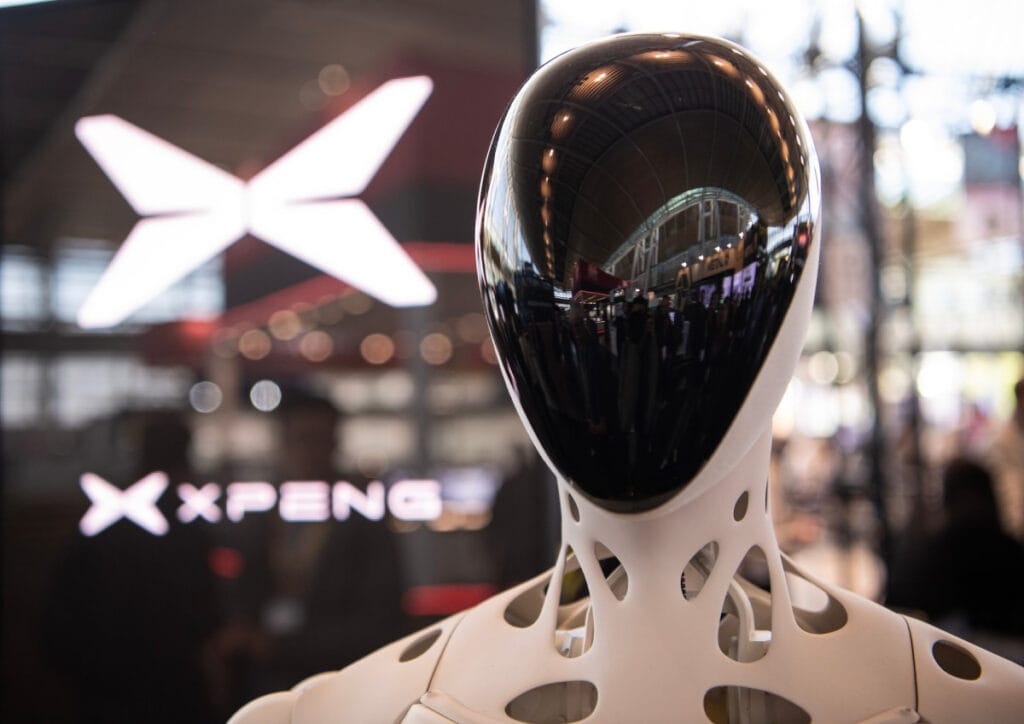
The race to capitalize on humanoid robotics is gaining momentum among Chinese automakers, mirroring Tesla’s ambitious ventures in the field. This week, Xpeng’s robotics division secured over $900 million in funding, achieving a post-money valuation exceeding $6.3 billion. This financing round, led by IDG Capital and supported by major players like Tencent and Alibaba, marks a significant milestone as the largest single-round private investment in China’s ’embodied AI’ sector.
In addition to Xpeng, other Chinese manufacturers are making strides in robotics. Chery Automobile’s AiMOGA is reportedly gearing up for an initial public offering, while BYD has unveiled its humanoid robot, Xiao Di. Companies such as Changan, GAC, Li Auto, SAIC, and Seres are also exploring humanoid robotics, indicating a broader industry trend.
Michael Dunne, CEO of Dunne Insights, notes that Xpeng is particularly attuned to Tesla’s developments. “Xpeng is the most focused on autonomy and has made significant commitments to humanoid robots,” he stated, highlighting the vision of founder He Xiaopeng, who perceives greater profitability potential in robotics compared to traditional automotive sales.
He Xiaopeng and Xpeng co-president Brian Gu have demonstrated their confidence in this direction by investing approximately $100 million of their own funds into the robotics unit. Their flagship project, Iron, is designed as a humanoid robot optimized for commercial use.
Chinese automakers possess a manufacturing advantage, with Dunne emphasizing their capability to produce the necessary hardware. However, the challenge remains whether they can match Tesla’s expertise in artificial intelligence.
While Xpeng and others are making headlines, they are not alone in the humanoid robotics space. Companies like Agility Robotics, Apptronik, and Figure are also vying for commercial deployment at scale.
Hyundai’s Boston Dynamics is advancing towards this goal as well. The automaker plans to integrate its Atlas humanoid robot into its Georgia factory this year, with aspirations to utilize these robots for tasks such as parts sequencing by 2028. Hyundai’s collaboration with Google’s AI lab, DeepMind, aims to accelerate Atlas’s development, further enhancing its capabilities.
Other automotive firms are also exploring robotics. Mobileye recently acquired humanoid robot startup Mentee Robotics for $900 million, while Rivian is venturing into robotics through its Mind Robotics spinout, albeit with a different approach than traditional humanoid designs.