
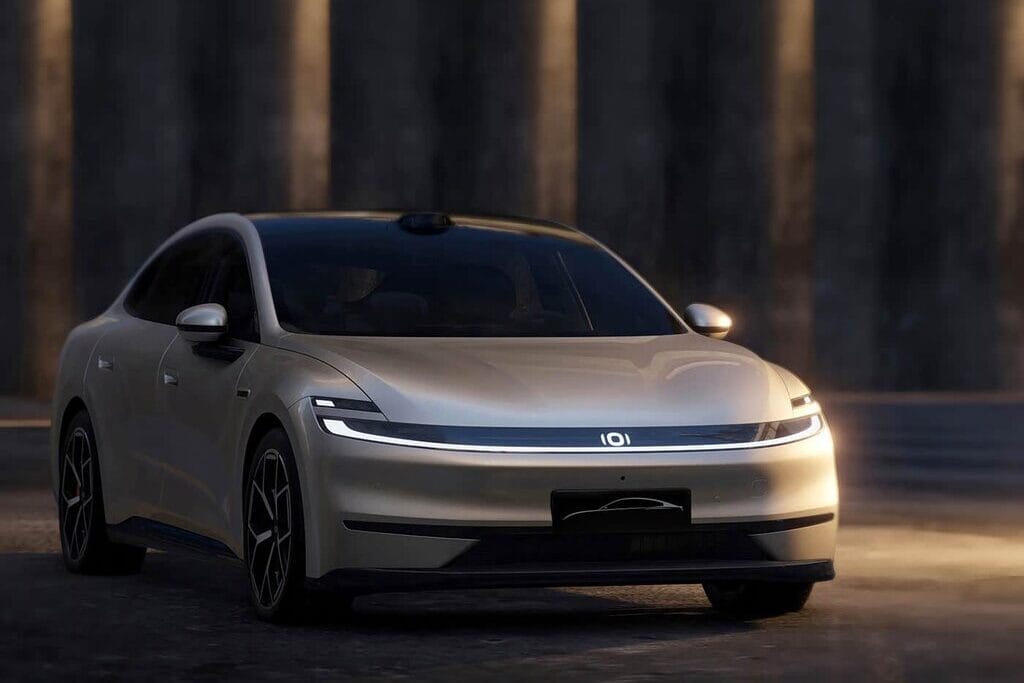
The Chinese company Changan Automobile unveiled its global strategy for sodium-ion batteries at a special event titled “Changan SDA Intelligence: Launch of the Global Strategy in the Field of Sodium-ion Batteries.” The event saw the debut of the Changan Nevo (Qiyuan) A06, the world’s first mass-produced passenger electric car powered by sodium-ion batteries, writes tomsguide.
The Changan Nevo A06 is equipped with a CATL Naxtra sodium-ion battery with a capacity of 45 kWh, which provides a range of more than 400 km on a single charge. The CATL Naxtra sodium-ion battery uses third-generation CTP (Cell-to-Pack) technology. It has a cell energy density of up to 175 Wh/kg.
According to Changan, the harsh winter tests in Yakesha have confirmed the battery’s high performance, meeting all user requirements for range, low-temperature resistance, safety, and discharge performance.
The tests found that the battery’s discharge capacity at -30℃ is nearly three times that of conventional lithium iron phosphate (LFP) batteries of the same capacity. In addition, the new battery retains more than 90% of its capacity at -40℃ and operates stably even at -50℃.
In addition, the Naxtra battery exceeds existing Chinese standards. Even under extreme damage conditions, including multi-directional deformation from extrusion, drilling with an electric drill, and sawing, the fully charged battery did not smoke, ignite, or explode.
Changan Automobile has already announced that its manufacturers, including Avatr, Deepal, Nevo, and Uni, will gradually introduce CATL’s Naxtra CATL ‘s-ion batteries into their future models.
According to CATL, as sodium-ion battery technology advances, the projected electric range could increase to 500 km or even 600 km. Hybrid cars with an extended range can travel about 300-400 km on electric power.